
Tradeshow Marketing: What Marketing Trends we Saw at CES 2026
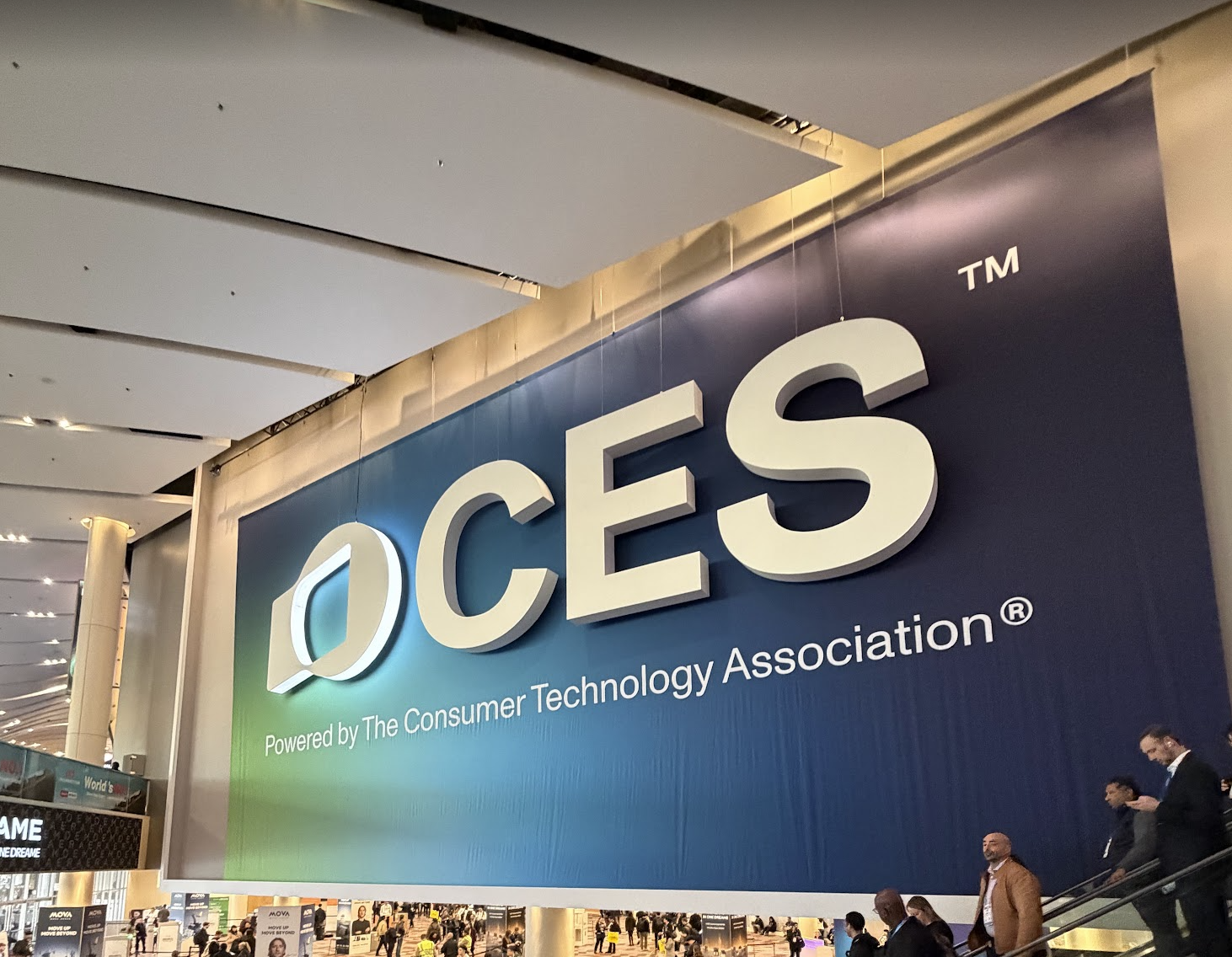

After returning from the 2026 Consumer Electronics Show (CES) in Las Vegas, we’ve been reflecting on what we find most interesting at tradeshows: booth design and brand marketing. The many days of walking around and taking in not only the products themselves, but how they were advertised, allowed us to compile a list of what tradeshow marketing worked and what didn’t.
Brand Colors and Booth Designs
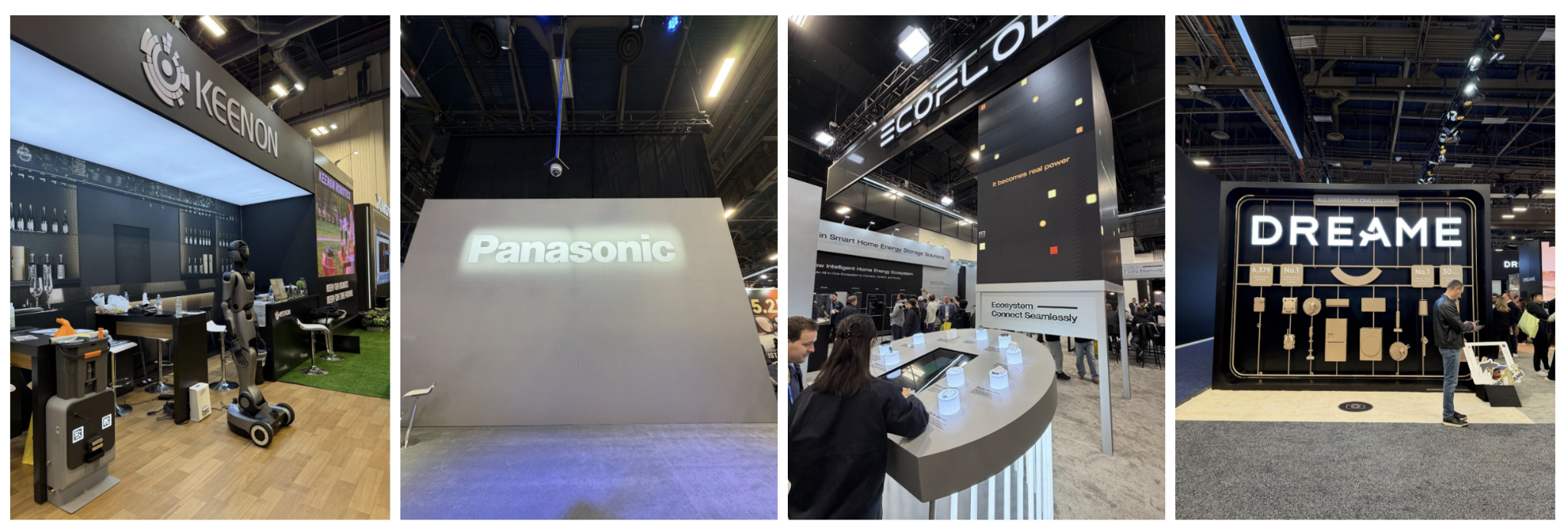
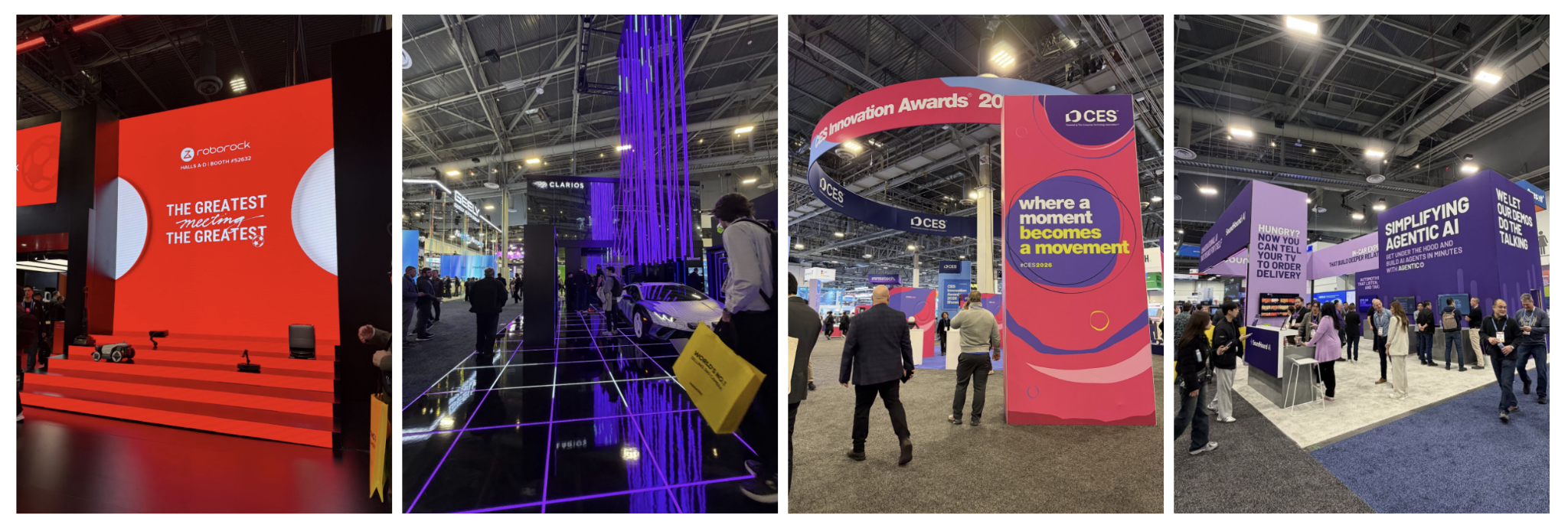
Pantone must’ve been onto something, because neutrals seemed to be “in” for product development companies and their booth designs. In a sea of neutral and greyscale branding, the booths that stood out the most were the ones that actually used color. This isn’t to say fully get rid of the neutrals, they can absolutely make a brand appear clean and modern, but from a designer’s point of view, if your booth had color, you differentiated and strategically used color as a tool.
Instagrammable Moments
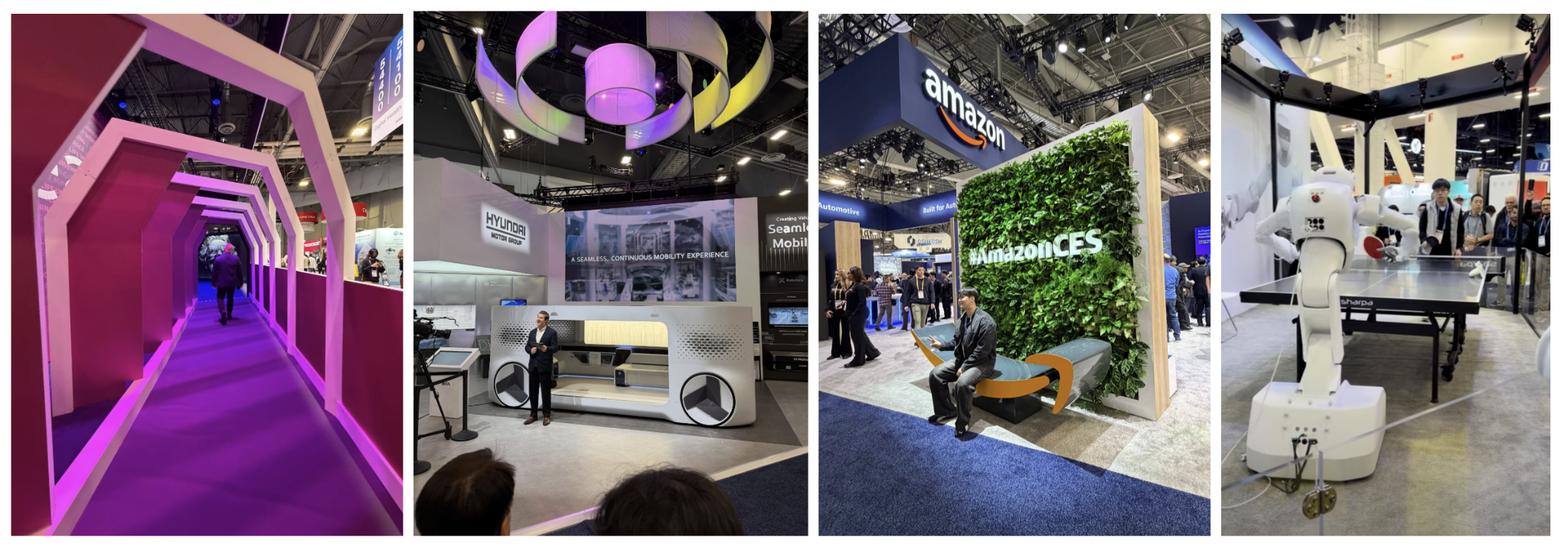
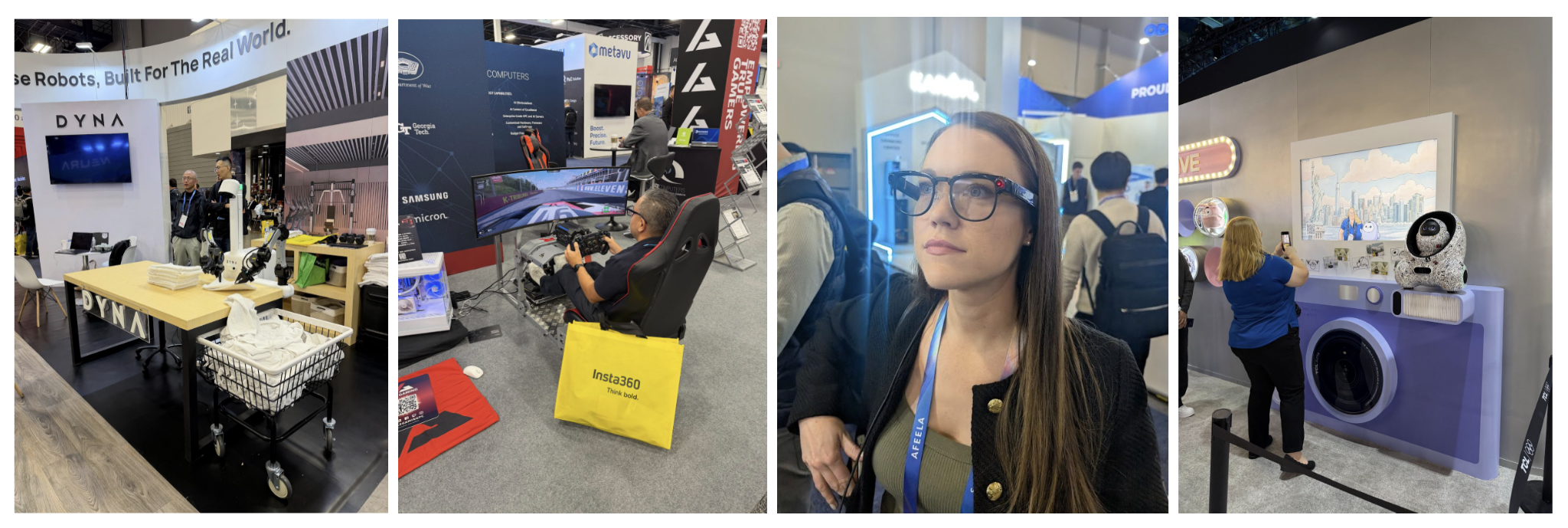
With people coming from all over to see the show and using their phones to document the new products and their time spent, many companies turned their booths into Instagrammable spaces as a tradeshow marketing tool. Whether that be an instagram-worthy background with a place to sit for a picture, a stage for live product demos with strategically placed products and logos for photos, or even just robots (because it's CES!) doing crazy things that draw huge crowds with potentially hundreds of people filming the moment. It’s a great way to stand out, engage potential customers, and get your product viewed online.
Product Demos
At CES, having a product demo at your booth is more common than not. People come to trade shows for face-to-face interaction and the opportunity to touch and feel the tech that we can otherwise only see on a screen. There's nothing quite like an in-person product demo; being able to touch and feel the device, experience its visuals and sounds, and understand how the product works in real time. The best booths gave seamless product demos that worked well, ran smoothly, and truly showed off the product's capabilities and differentiators. This creates memorable experiences and customer interactions with the product and company.
Business Cards (or lack of them?)
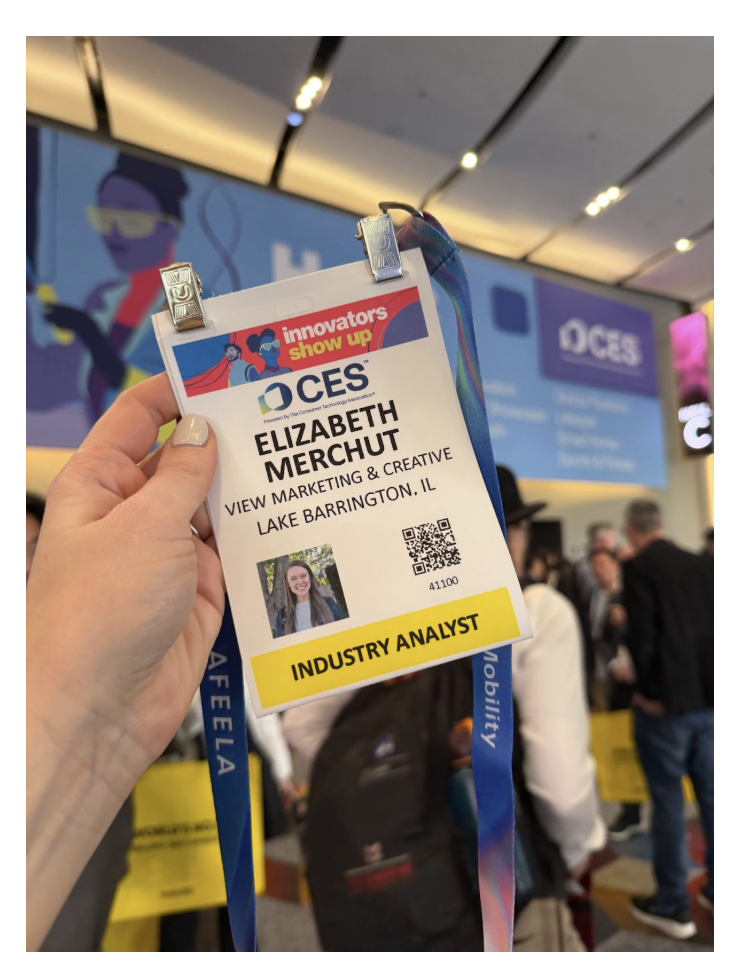
Unlike tradeshows of the past, the exchanging of business cards was not a common practice. Instead, booths scanned badges or exchanged LinkedIn QR codes. Whether this was a result of COVID or just the ever-evolving digital world doesn’t necessarily matter; it's smart. From a privacy perspective, you're not giving away your email address or contact information to just anyone. Instead, when you're connecting with someone on LinkedIn, you can still send direct messages to each other, but it also gives each person the chance to research if the relationship makes sense or not. Down the line, if DMs go well, you can later exchange email addresses to further the personal and working relationship. From a practical point of view, this also helps people not get on marketing email lists that they don't want to be on.
Product Literature
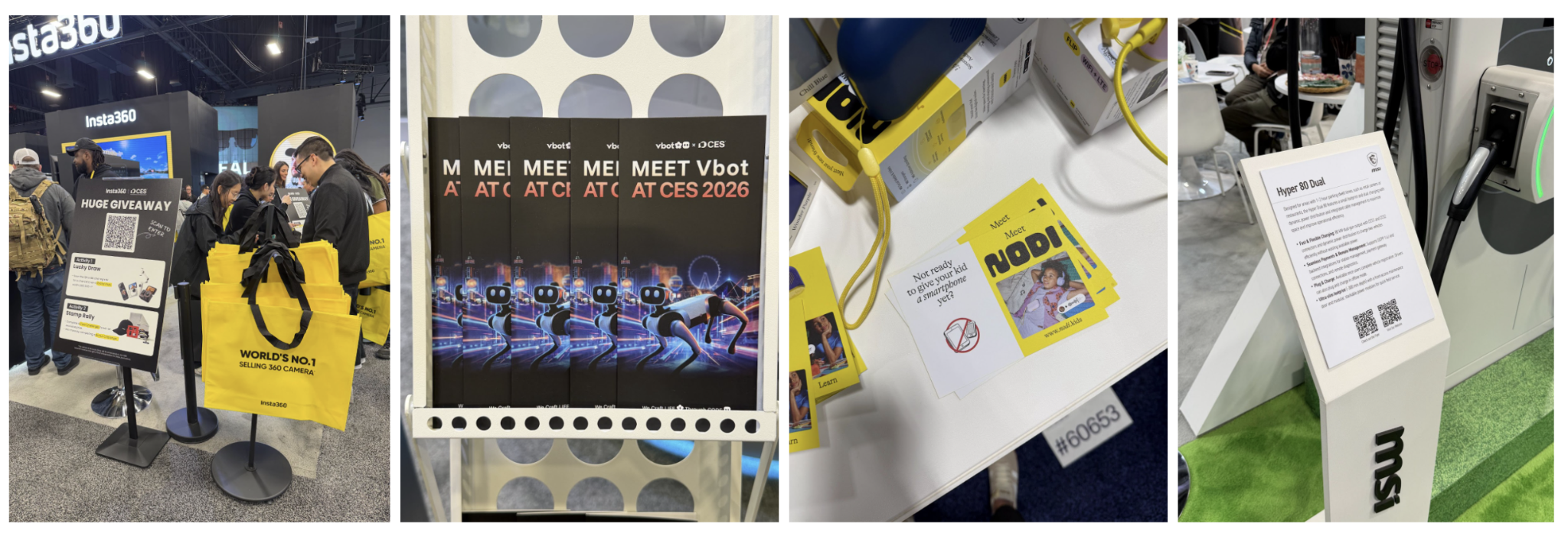
Based on the large yellow bags that CES gave out to every attendee, show organizers certainly expected people to gather lots of product literature. This raises a lot of questions, though. Were people actually loading up on product literature? Do the people actually take this home with them? Is there value in product literature? Some booths had stands that had been emptied of product literature and other booths still had stacks of product literature. Honestly, product literature is still a staple of modern trade show booths, it just may show up in different ways now. Some people still ask for literature or pick it up and take it; however, some booths had lots of QR codes. It may just fall to personal preference. In this digital age, scanning a code and avoiding the clutter of loose papers may work best for some people, but physical literature is also a good way to take something away from the booth to remember product and company details.
Giveaways
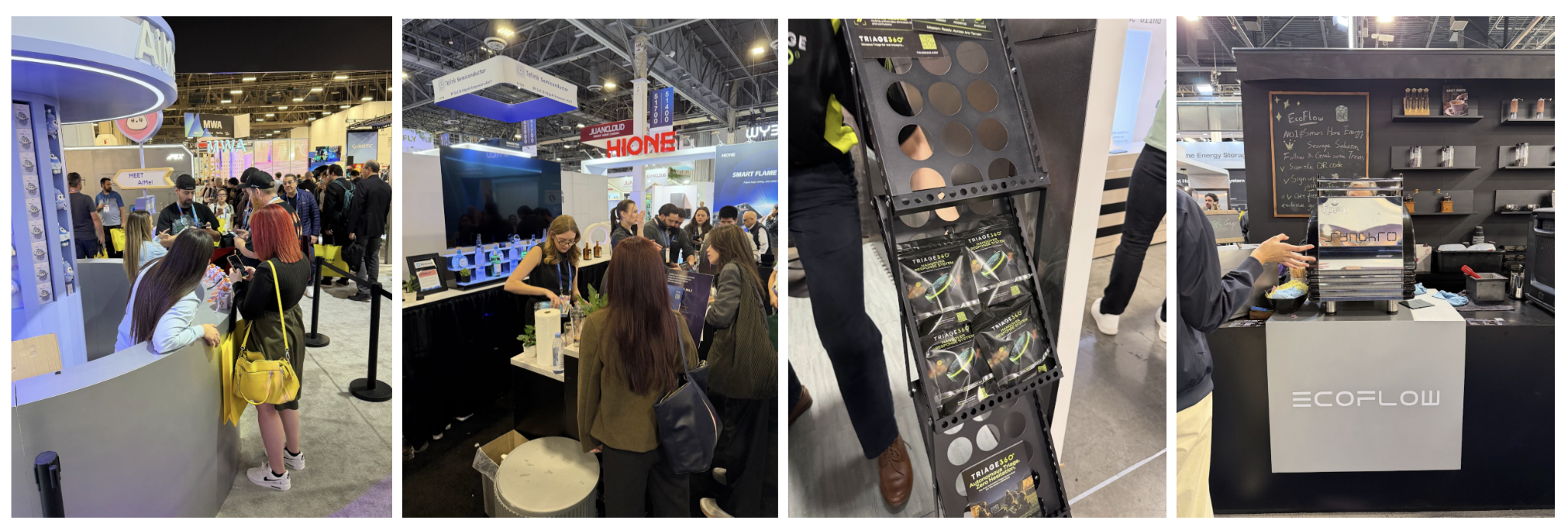
People always have and always will love free stuff. Traditional tradeshow giveaways usually included smaller-scale items such as pens or notepads, but this wasn’t the case for most booths at this year’s CES. Instead, some companies opted for giving away larger items such as skateboards, robot stuffed animals, and mocktails, which had people waiting in hour-long lines. Attendees get a free item, and the company gets high traffic flow and more visibility. Some booths handled giveaways based on personal connections. An attendee that struck up a meaningful conversation about the company, product, etc. might’ve received a giveaway bag or product straight from a company representative.
With tradeshows, especially ones as large as CES, strategies for tradeshow marketing will come and go. Some have stuck around forever, some are brand new, and some have been changing slightly each year. The most important thing is to keep evolving with the times. The world has gone digital; utilize technology like LinkedIn and Instagram. Amongst a sea of thousands of companies, make yourself stand out. Your genius product deserves branding that enhances it, and at these shows, tradeshow marketing is critical in making sure your product gets highlighted.
We've built a lot of brands and have run marketing programs for dozens of companies. Need help getting started or taking your campaign to the finish line? Reach out to our team to chat!
How to Use AI For Marketing: View’s Take
Saying that AI is all around us is an understatement - it has absolutely infiltrated all of the platforms, softwares, and tools we use on a day to day basis. Our team is constantly evaluating if AI tools can be of help to our team and our clients, or if they simply de-humanize marketing efforts and lead to lackluster results.
Reflecting on my Summer with View: What I’ve Loved, Learned, and Will be Leaning on as I Continue my Education
Make a plan with our team


